Different Loading Methods

Flexible and Efficient: One sensor system for dynamic, thermal and vacuum loading.


Dynamic Loading

For the dynamic loading the piezoshaker excitation systems are designed by isi-sys. It consists of a Piezoshaker, amplifier and function generator. For a detailled description please refer to the report Products / Piezoshaker Systems „


Piezoshaker frontneu


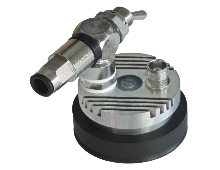
The Piezoshaker can be attached by vacuum to the object surface.
The HVDA-0-180 amplifier is especially design for isi-sys Piezoshakers and mobile application, where high power at low weight and compact size is a big advantage for mobility and flexible handling. High frequencies up to 100kHz and more as well as large forces and acceleration have been generated in combination with the different isi-sys Piezoshaker modules.


Thermal LoadingThermal loading
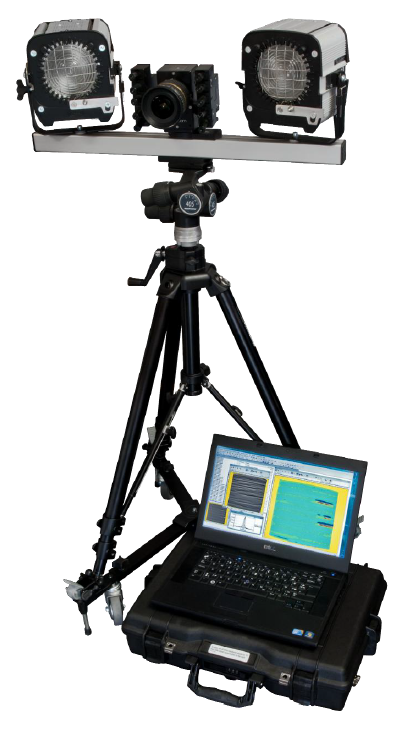
isi-sys offers timed thermal loading modules to to heat-up the objects of measurement.

A automated precise control of heat loading and a corresponding timed shearographic measurement is required to achieve a reproducible test procedure for non destructive testing experiments and automated systems.

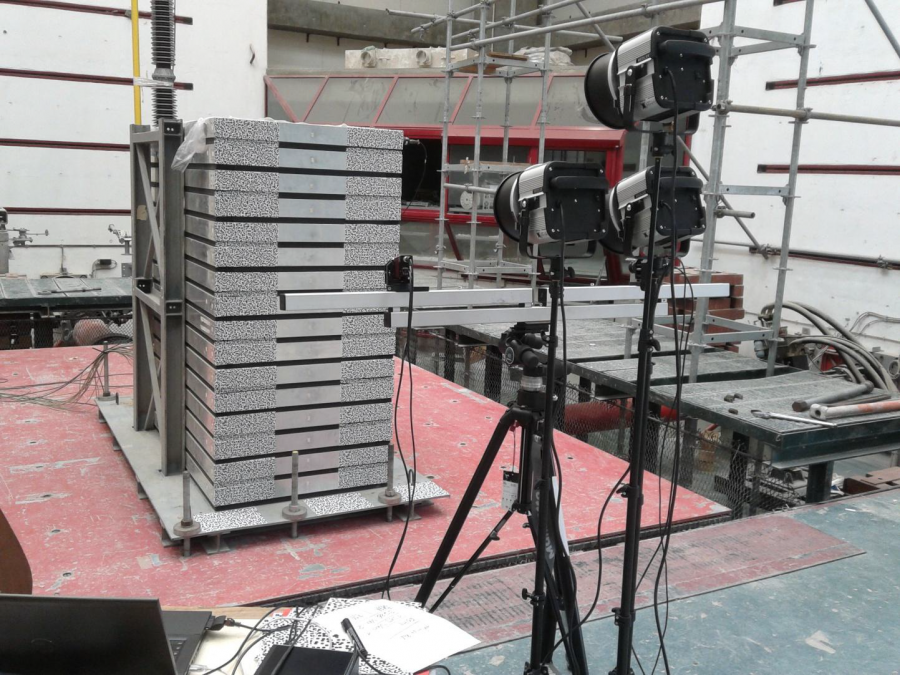
Any conventional halogen flood lights with 220V can be connected. isi-sys recommends some flood lights used for professional photography. Thus they can be mounted on standard light stand of e. g. Manfrotto etc. and easily directed to the area of interest independent of the sensor head. Also this lights offer some choices of reflector combinations.

The start and duration of the heat loading and the measurements can be set per computer controlled timer, which permits reproducible sequences of the test process.


Vakuum Loading

The vacuum is another loading method for non destructive testing. The modular system concept allows to combine the SE2 sensor with different vacuum loading devices, which reduces system expense and keeps the equipment smart and mobile compared to other solutions .

The vacuum methods can be categorized depending on the loading principle into vacuum chambers/vacuum cabins and vacuum hood/vacuum windows.


Vacuum hood and Vacuum window
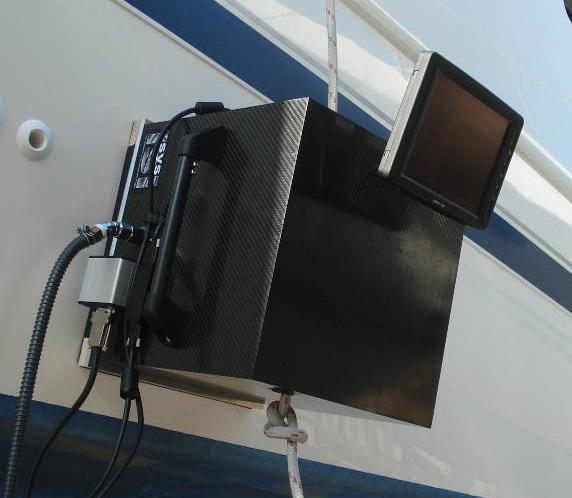
Vakuum hoodThe vacuum hood is a modular extension accessories for the SE2 sensor. The sensor will be mounted inside of the hood and therfore the measurement area is covered from sun light influences.

The system has small dimensions and is for this reason very mobile and flexible, additionally the low required vacuum pump power is an advantage.
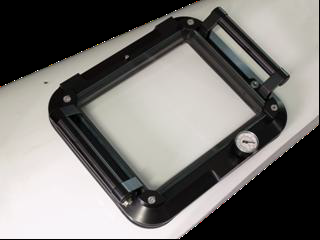


Vakuum window

If you use the vacuum window, the sensor is outside the vacuum volume. The system is monitoring the object through the window. The bending forces are only across the field of view.

Due to the small volume of the vacuum window hood it can be used in combination with the small isi-vacuum unit (also used for isi-piezoshakers with vacuum cup adapter). The unit includes two separate vacuum pumps, where the second can be used for the vacuum suction cup tripod.


Vacuum chamber and Vacuum cabin

Generally vacuum chambers or cabins have the advantage against vacuum hoods and windows, that the forces appear uniform from all sides on the object. This avoids superposed fringes by global deformation such as by hood, where a bending force on the object surface is superposed, as usually the pressure forces are applied only in one direction on one side of the surface, where the hood is applied.

In both systems the sensor is inside the vacuum volume, which causes pressure loading also on the sensor. The camber and the cabin are bigger than the object and therefore depending on object size the mobility is restricted.


isi-sys offers the newly designed testing vacuum cabin based on aluminium-foam sandwich elements, which is recommended e. g. for frequently manual spot tests or laboratory use.  Samples with a size up to 450 x 750 mm can be measured in this cabin.

Furthermore isi-sys GmbH cooperates with different manufacturer for large vacuum chambers.
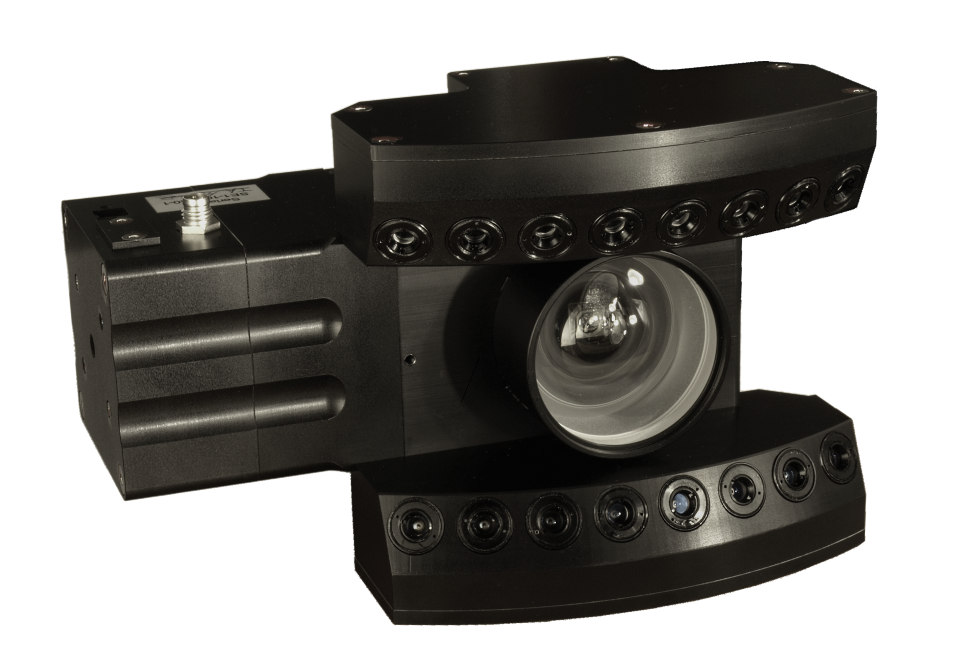


SE-Sensors Types

No safety requirements: Laser class 1 with power from 0,1W up to 12W per module

High resolution and sensitivity: 5 MPixel sensor, 10nm light phase reconstruction

High quality and variety of lenses: Designed for professional Nikon-F-mount lenses


SE1 Sensor

SE1 shearography


The SE1 sensor modular system

for automated applications such

as tire testing.


SE2 Sensor

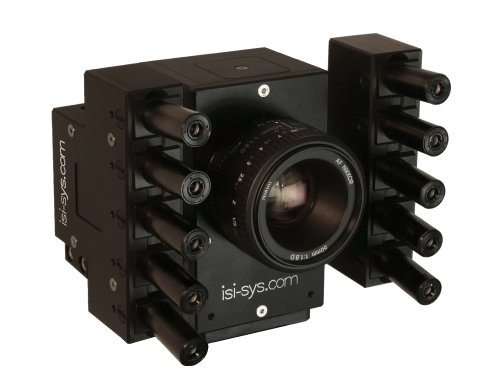
isi-sys_se2_2arrayneu2


SE2 Sensor with 1W light power by

10 adjustable laser diodes for flexible

laboratory use. The SE2 is the most

flexible and recently new upgraded

design in the SE-sensor family.


SE2 neu array


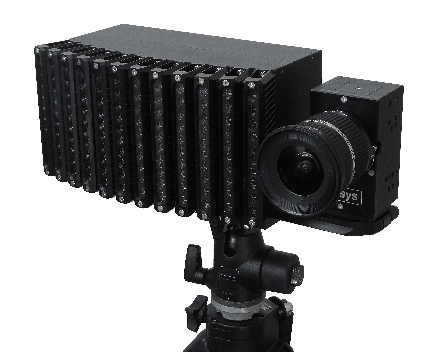
SE2 Sensor with 12 W laser diode module

for outdoor and large field of view

applications.


SE3 Sensor

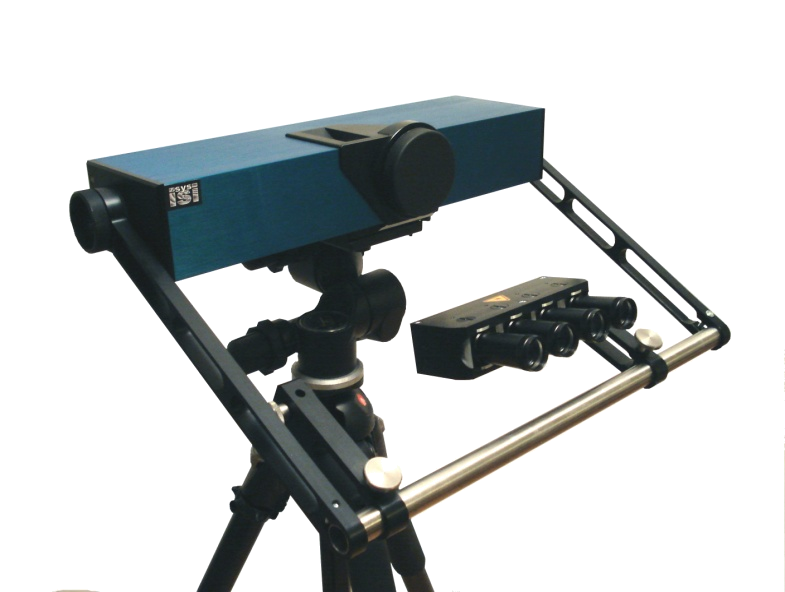
SE3


SE3 Sensor


Deformation Measurement

The following video clips show a deformation- or strain-measurement of a metal spring element, measured by using Vic-3D.

The first deformation measurement would be made in the X direction.


The second deformation measurement would be made in the Y direction.


The third deformation measurement would be made in the Z direction.


In the last case you see the result of the strain measurement.

Motion Measurement on Rear Swinging Fork

The video shows the application of a stereo image correlation (phase synchronized) for a three-dimensional displacement measurement or movement analysis (Vic-3D).

The used stereo camera system is based on two 5 Mpixel cameras with a frame rate of 6Hz (at full resolution) in combination with the isi-sys synchronisation and trigger device for stroboscopic opservation of periodic events.

X

Four measurement areas (hydraulic cylinder – below, wheel hub – left, swingarm – middle and linear unit – right above) with specle pattern were monitored for the evaluation. The vector arrows represent the current displacement state.


Combination Stereomicroscope and Vic-3D digital image correlation

Application examples of a special stereomicroscope in combination with Vic-3D digital image correlation on electronic components.

Stereomikroskop

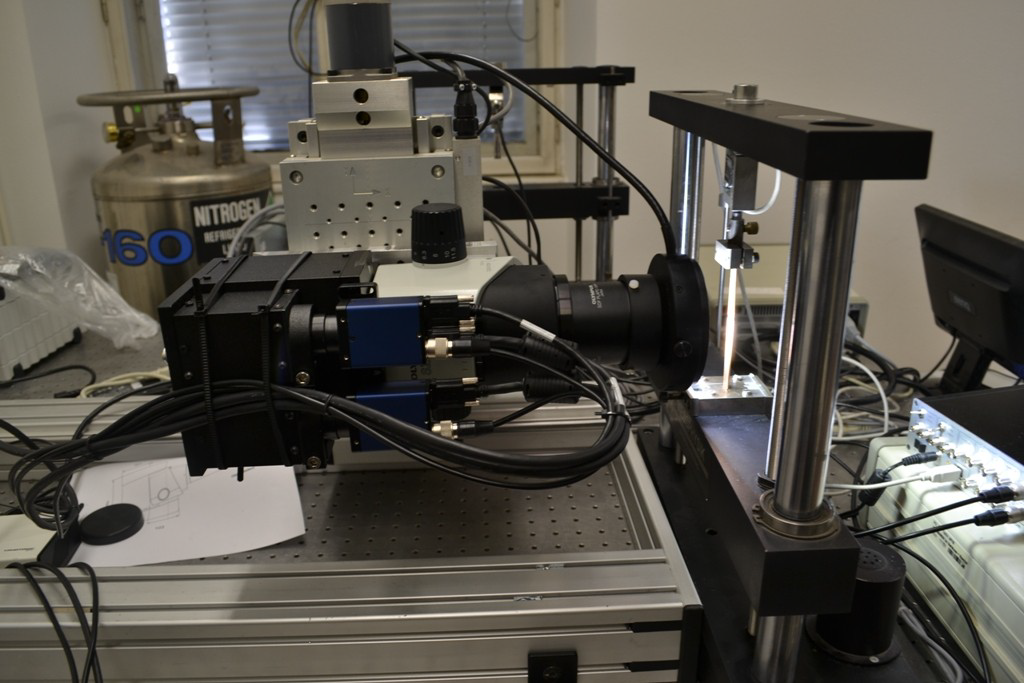
Image 1: Measurement setup

Measurement set up: Stereo microscope mounted on x-y-z-microtable (backside) and tensile machine (right).

Stereomikroskop2

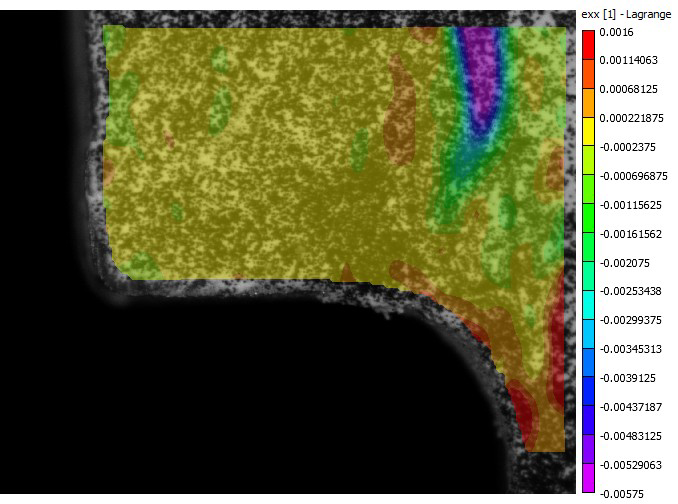
Image 2: Strain in x-direction

Stereomikroskop3

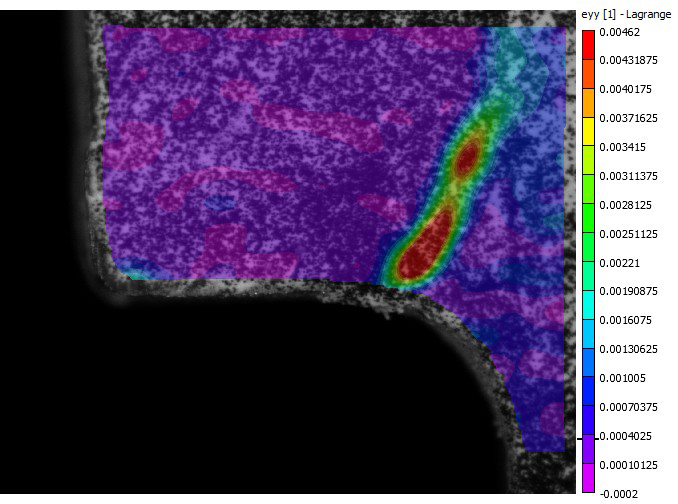
Image 3: Strain in y-direction

Strain distribution of a half cut capacitor-chip (left part) and its soldering area (round section). The board is under
bending load. The board is vertical on the right sight of the image. The local red area is showing a crack in the
soldering part. Image area approx. <2mm.


Lötkugel

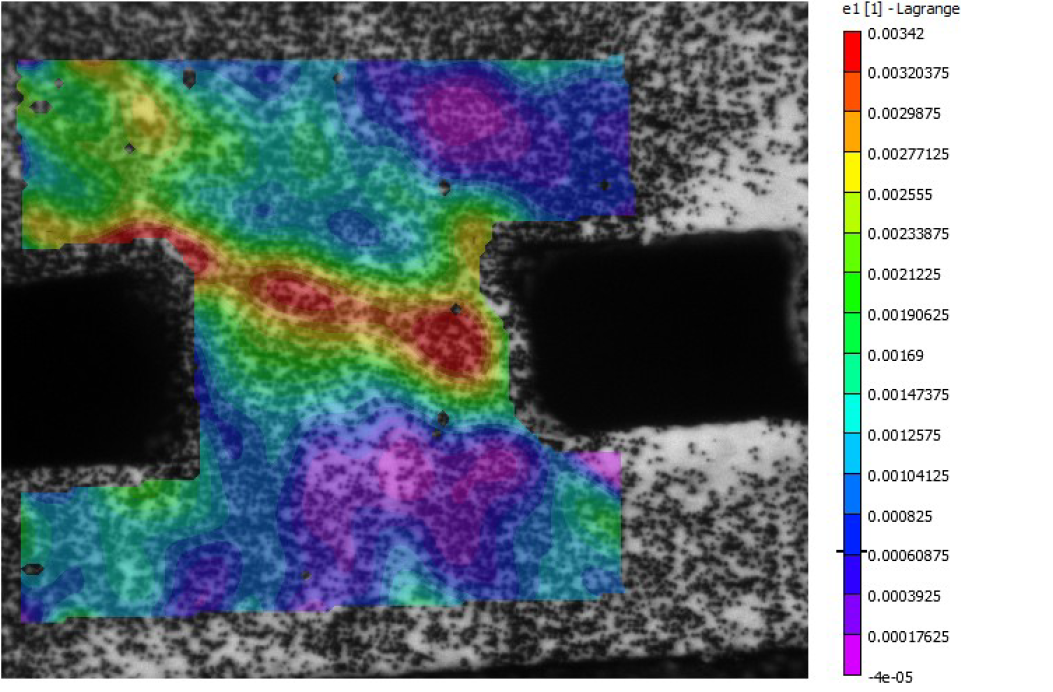
Image 4: The main strain of measuring a solder ball d=300µm under horizontal shear stress is shown.


Operation mode analysis on a mobile phone during vibration alert

Nokia3

x

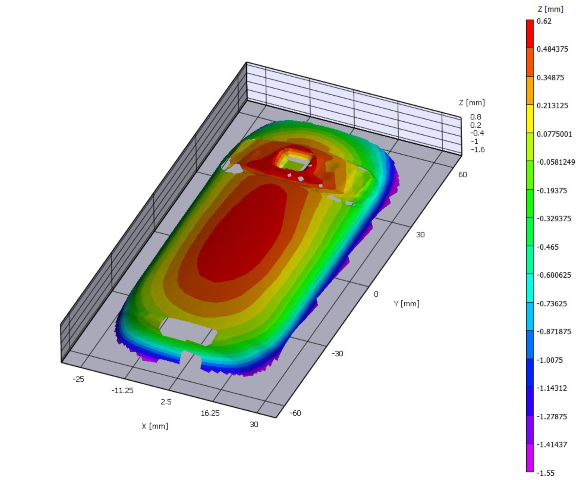
Reference coordinates and contour of the mobile phone.


x


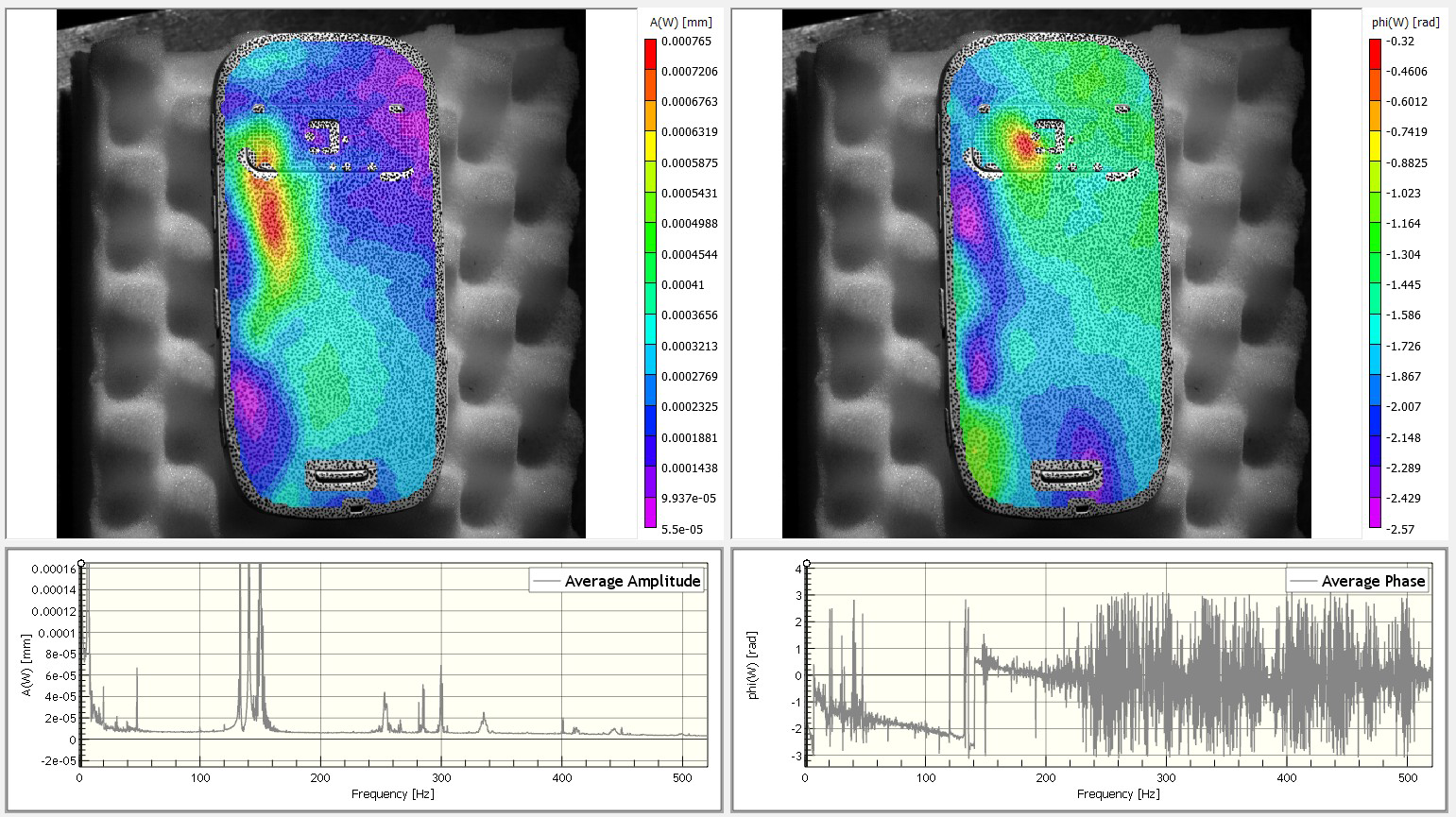
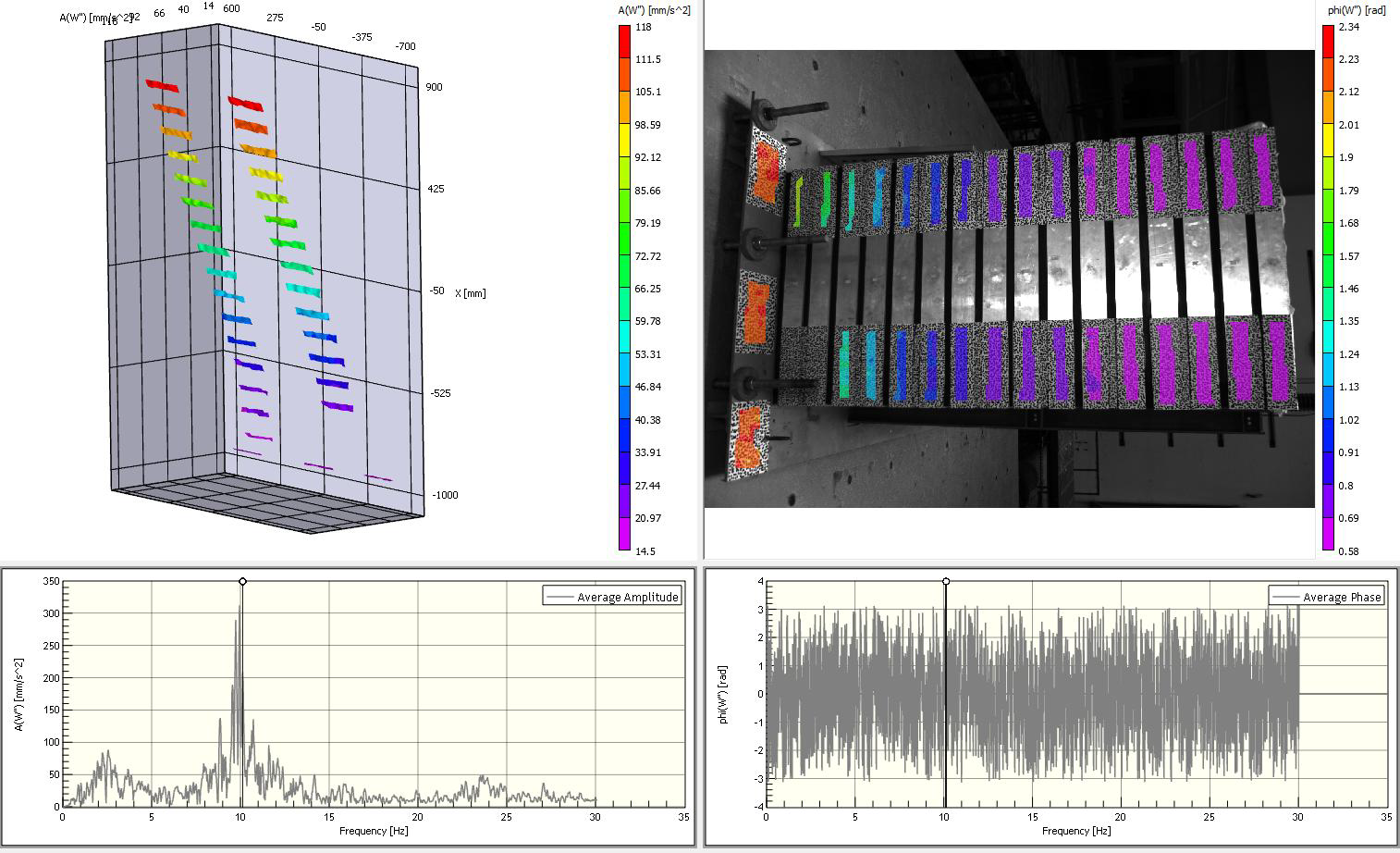
This article describes the measurement and analysis of the operation deflection shapes and rigid body vibration motions of a mobile phone excited by its vibration alert. The mearurement is done, using a non contact, 3D, full-field, high speed stereo image correlation system in combination with the new Vic-3D FFT module analyzes the recorded deformation data in the frequency domain by phase-separation method.

Nokia

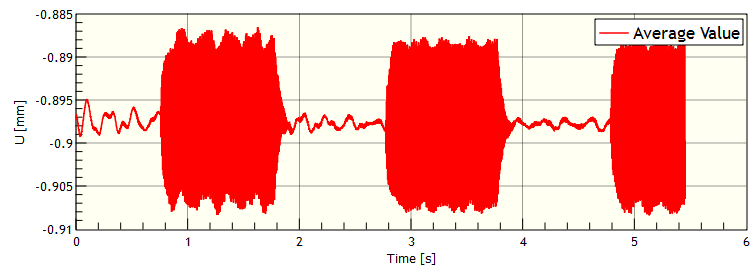
The measured deformations and displacements during the vibration alert are evaluated against the reference state for each stereo image pair. In this case the recording time covers about 5,5 seconds with 1000 FPS corresponding to about 5500 single measurements.

The following figure show the average vibration amplitude U.


Nokia2

Dynamic Compression of Metals

Dynamic compression

Studying the behavior of metals during a high-speed dynamic compression event has always been challenging due to the complex test set up and fast data capture rates required. Currently, very little literature is available regarding deformation behavior at strain rates of  10 to 500s-1. Utilizing high-speed cameras, the Vic-3D HS system can be used to quantify the surface displacements and strains in three dimensions over the entire field with great precision. Digital Image Correlation (DIC) has gained widespread popularity over recent years in such high-speed applications due to its high accuracy, flexibility and ease of use.


Dynamic compression2In this example, a 6mm diameter cylindrical specimen was compressed at a strain rate of 50s-1. The Vic-3D HS system was used to capture the  surface displacements and  strains on  the  specimen during the event. A random speckle pattern is applied to the specimen that allows the analysis software to easily track the deformation to sub-pixel accuracy. Although the high- speed cameras are capable of much higher capture rates, for this test they were set to an appropriate frame rate of 14,400fps to maximize spatial resolution while acquiring an adequate number of images during the event. The cameras were post-trigger at a resolution of 1024 x 400 pixels. After the event, the images are transferred to the computer’s  hard  drive, and  then  post-processed using Vic-3D analysis software.

Images courtesy of Amos Gilat & Jeremy Seidt at Ohio State University.